What a Pontoon Boat Rental Actually Fits: Passenger Limits, Gear, and Group Size
Fourteen adults on a pontoon boat rental rated for twelve risk swamping the tubes. A single wake from a passing trawler can push water over the gunwales. Renters who ignore the capacity plate face fines from local marine patrols and immediate termination of the trip by the marina operator. The numbers stamped into the metal placard near the helm represent the tested limits of buoyancy and stability for that specific hull configuration. Before you commit to a flat-water outing instead of family charter duration planning on a larger vessel, understand how those limits get set.
Contents
- How does the Coast Guard determine maximum passenger capacity on a pontoon boat rental?
- What counts toward weight and passenger limits beyond headcount on a pontoon?
- When does a boat catamaran hull make more sense than a single-hull pontoon for your route?
- How do marina logistics and boarding change with a full passenger load on a pontoon?
- What should you confirm before searching for pontoon rentals near me?
Key takeaways
- The United States Coast Guard requires monohull and pontoon boats under 20 feet to display a capacity plate stating maximum persons and weight.
- A pontoon boat rental capacity plate lists both a maximum person count and a maximum weight in pounds.
- A pontoon relies on wide, flat buoyancy tubes for stability in protected bays and lakes.
- Boarding a fully loaded pontoon boat rental shifts the center of gravity rapidly.
- Before booking pontoon boat rentals near me, check the operator's stated capacity against the actual hull length and tube diameter.
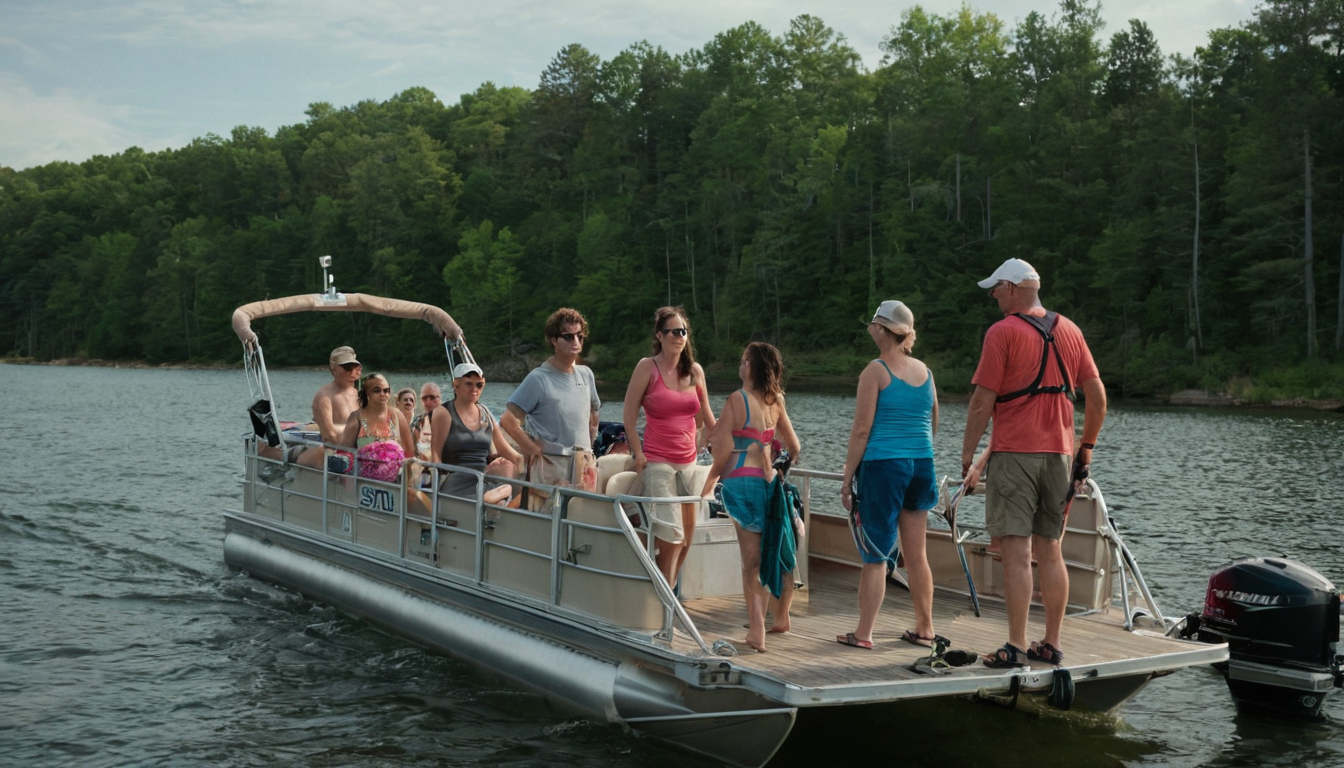
What a Pontoon Boat Rental Actually Fits: Passenger Limits, Gear, and Group Size.
How does the Coast Guard determine maximum passenger capacity on a pontoon boat rental?
The United States Coast Guard requires monohull and pontoon boats under 20 feet to display a capacity plate stating maximum persons and weight. For pontoons over 20 feet, manufacturers calculate safe loading using stability tests defined in 46 CFR Part 183. The plate applies to bareboat and captained rentals alike. For related context, review bareboat or captained trip.
Pontoon boats rely on sealed aluminum tubes for flotation. Manufacturers add weight to test these tubes until the vessel reaches its maximum safe draft, then apply a safety margin before stamping the capacity plate. Federal regulations under 46 CFR Part 183 outline the testing protocols for recreational vessels. Boats under 20 feet must carry this physical plate. Larger pontoons still undergo manufacturer testing based on American Boat and Yacht Council standards, which evaluate static stability and reserve buoyancy across the tube length. The resulting person limit assumes an even distribution of bodies across the deck. Cluster everyone near the boarding gate, and the center of gravity shifts, defeating the engineering behind the rating.
Recreational renters operating without a captain follow different rules, but the physical capacity plate still applies. A pontoon boat rental configured for 12 people matches the typical volume of two 24-inch diameter tubes spanning 22 to 24 feet. Pushing beyond that headcount means the aluminum logs sit lower in the water, reducing freeboard. Lower freeboard lets chop wash across the deck faster. Marinas enforce the plate limit because liability follows the owner when a renter overloads the hull. If your group exceeds 12 people, you need two boats rather than one crowded deck.
Weight distribution matters more than the strict headcount when children are aboard. Four kids on one bench seat create a localized list that stresses the nearest pontoon tube. Spread smaller passengers across the deck to maintain the centerline balance the manufacturer tested. Life jackets sized for children weigh less than adult vests, but that difference does not buy an extra boarding pass. Every breathing person on board counts toward the maximum persons figure stamped on the placard.
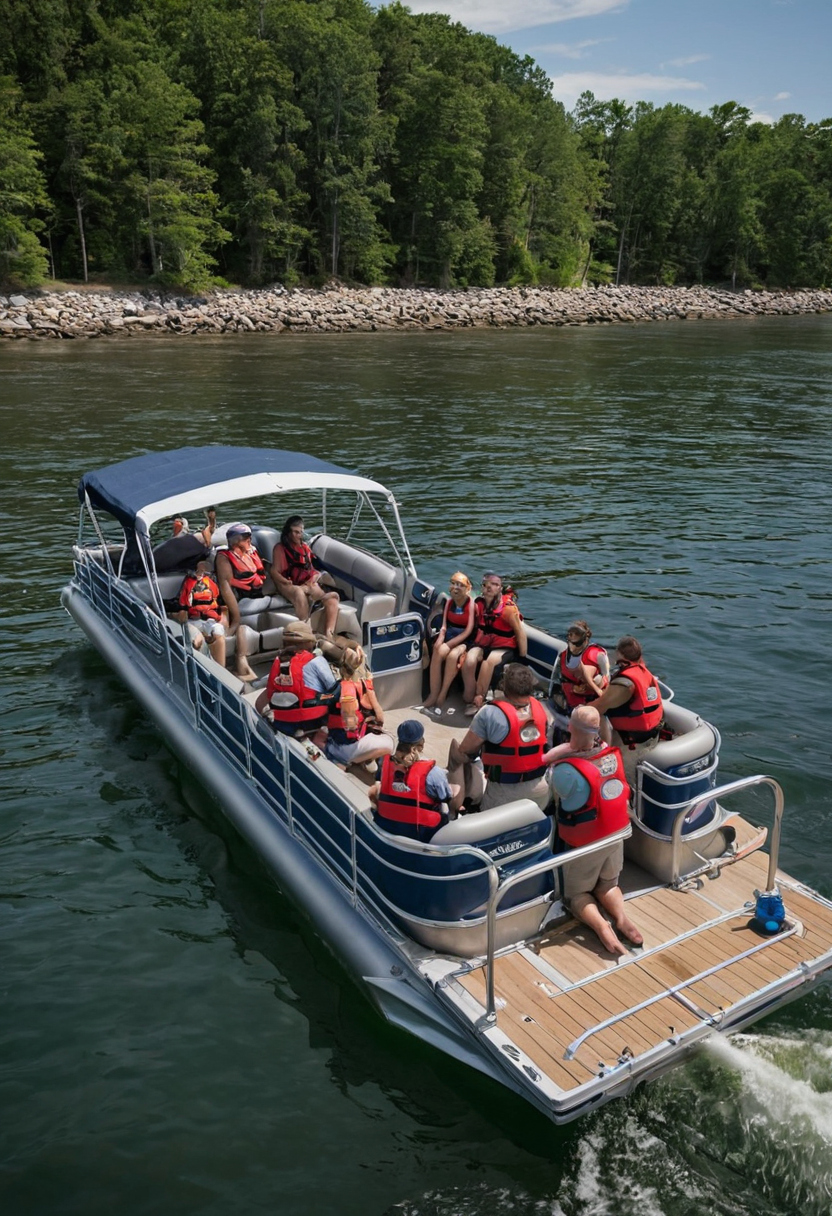
How does the Coast Guard determine maximum passenger capacity on a pontoon boat rental.
Coolers, fishing gear, and aftermarket accessories use up the remaining weight allowance long before the last passenger steps aboard.
What counts toward weight and passenger limits beyond headcount on a pontoon?
A pontoon boat rental capacity plate lists both a maximum person count and a maximum weight in pounds. Gear, coolers, fuel, and aftermarket additions like a bimini top all count toward that weight allowance. Exceeding the pound limit with fewer passengers is still a violation of safe loading standards.
The Coast Guard calculates that allowance using an assumed average passenger weight of 185 pounds per person. That figure leaves little margin once you stack gear on the deck. A standard 72-quart cooler packed with ice and beverages adds 60 to 80 pounds before anyone steps aboard. Factory fuel in a typical 20-gallon tank contributes another 120 pounds. Aftermarket hardware adds to the load. An aluminum bimini frame and canvas top typically weigh 40 to 60 pounds. A livewell tank filled with water for bait or catch adds roughly 8 pounds per gallon. A bow-mounted trolling motor and its deep-cycle battery can push past 100 pounds combined.
Pontoon tubes spread this total load across two or three aluminum cylinders running the length of the hull. Manufacturers design the center tube on a tri-toon model to handle the heaviest concentration, usually the engine and central passenger traffic. Stack weight unevenly, and one side sits deeper in the water than the other. That imbalance reduces freeboard and makes the deck sluggish in turns.
When does a boat catamaran hull make more sense than a single-hull pontoon for your route?
A pontoon relies on wide, flat buoyancy tubes for stability in protected bays and lakes. A boat catamaran uses two narrow displacement hulls designed to cut through chop in open coastal waters. If your route leaves the no-wake zone or crosses exposed sounds, the catamaran handles wave periods better.
- Pontoon: Calm inland lakes, slow rivers, sheltered bays with fetch under one mile, and routes staying inside marked no-wake zones.
Catamaran sponsons have sharper entry angles at the bow. Each hull parts the water instead of riding over it. In a two-to-three-foot chop, a power catamaran maintains forward way while a pontoon loses speed and pitches hard enough to shift unsecured gear across the deck.
Manufacturers typically rate recreational pontoons for operation in wave heights up to two feet and winds under 15 knots. Catamarans carry no universal small-craft wave limit because their design purpose is handling rougher conditions, but charter operators generally restrict both vessels based on local harbor forecasts.
The platforms roll differently. A loaded 24-foot pontoon rolls slowly and widely in beam seas, which feels comfortable until the amplitude exceeds the freeboard height. A 24-foot catamaran snaps back to center faster due to the wider spacing and deeper draft of its twin hulls. That quicker righting moment keeps coolers and passengers planted when a passing trawler throws a wake.
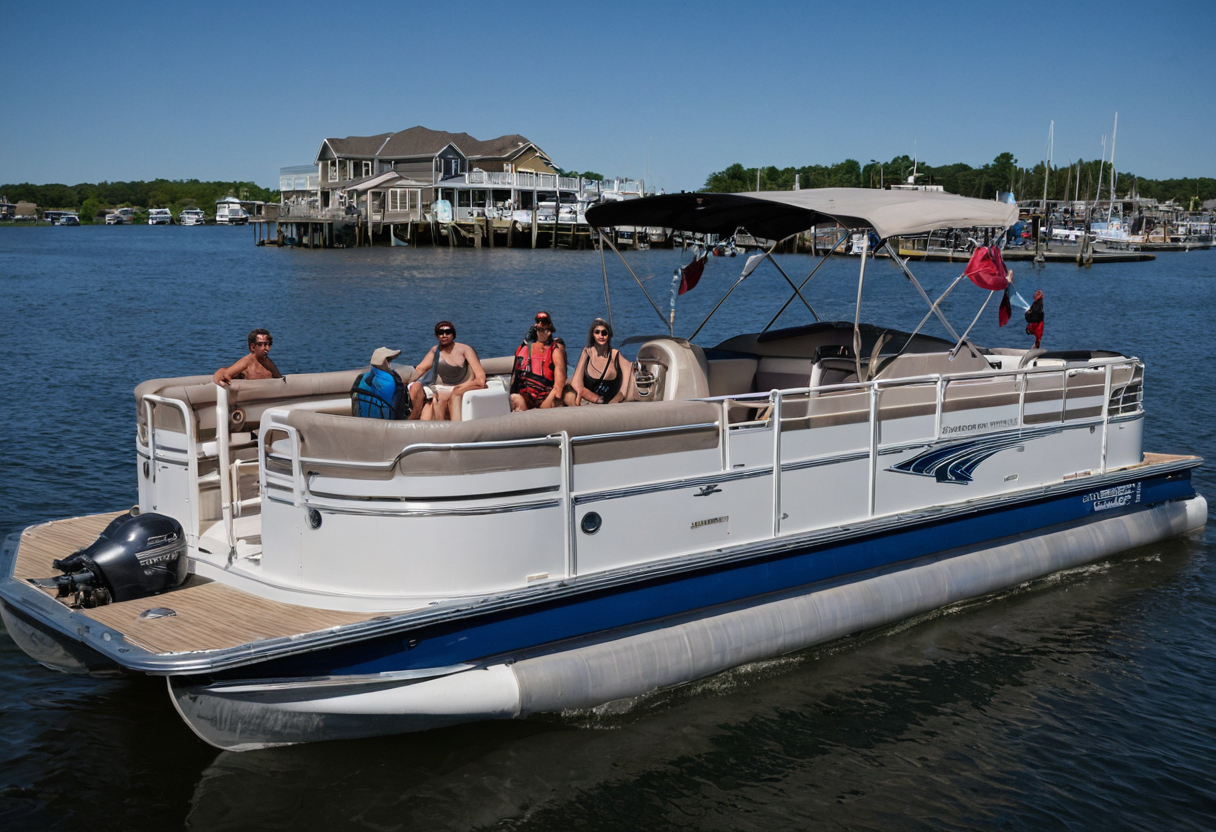
When does a boat catamaran hull make more sense than a single-hull pontoon for your route.
How do marina logistics and boarding change with a full passenger load on a pontoon?
Boarding a fully loaded pontoon boat rental shifts the center of gravity rapidly. Marinas require specific dockside procedures when loading groups near the maximum capacity plate limit. Spread weight evenly across the deck before leaving the slip to prevent listing and keep the outboard draft predictable.
Pontoon tubes sit low in the water, leaving the deck with minimal freeboard clearance above the surface. A typical 24-foot pontoon carrying 1,500 pounds of passengers and gear will sink an extra two to three inches compared to an empty hull. That added draft matters at low tide or shallow marina basins where the propeller needs room to clear the bottom.
A crowded gunwale creates a tipping hazard that does not exist on an empty deck. The flat floor plan makes it easy for guests to gather near the gate while waiting for friends. That habit bunches hundreds of pounds on one side of the hull. Charter crews direct foot traffic away from the boarding gate once the first few passengers are seated.
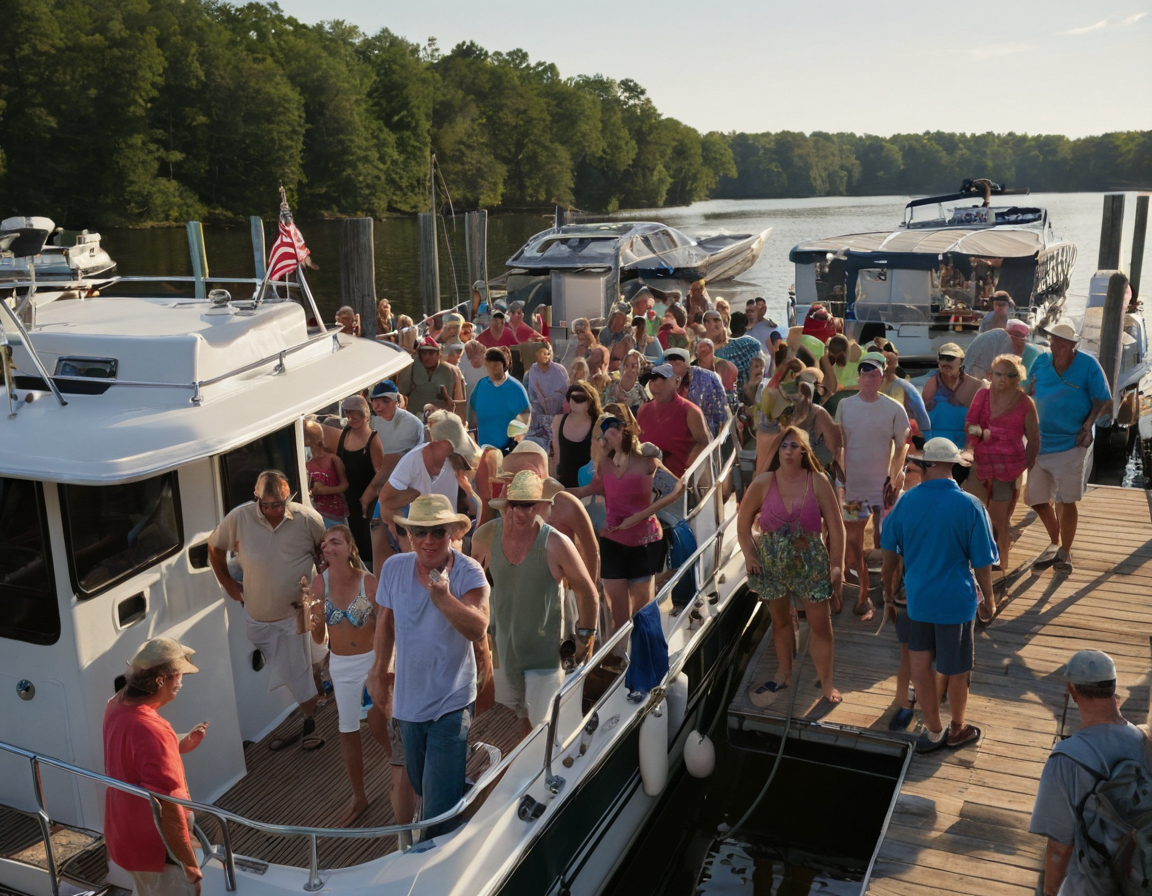
How do marina logistics and boarding change with a full passenger load on a pontoon.
What should you confirm before searching for pontoon rentals near me?
Before booking pontoon boat rentals near me, check the operator’s stated capacity against the actual hull length and tube diameter. Ask whether the quoted rate includes gear weight or assumes empty passengers. Confirm if the rental is bareboat or captained, as this changes who holds liability for loading.
A confirmed headcount and an honest tally of cooler weight settle the loading question before you untie the lines. Settle those numbers first, then pick the departure time that fits your group.
For more on this topic, see other guides on this site.