How Long Should a Deep-Sea Fishing Charter Be for First-Timers and Families?
A longer charter can reach more distant water yet produce a worse family outing. The practical rule is simple: choose the shortest trip that reaches suitable grounds, leaves meaningful fishing time, and remains comfortable for the least experienced passenger.
Which deep-sea fishing charter length is best for first-timers and families?
The best deep-sea fishing charter length depends on what the added hours accomplish. Compare range, usable fishing time, passenger stamina, motion exposure, and total cost before assuming that a longer trip offers better value.
- Choose a half-day when comfort, a first experience, or younger children matter more than range.
- Choose a three-quarter-day when extra transit is expected to provide materially more fishing opportunity and the group can manage a longer outing.
- Choose a full-day only when distant grounds, a specific fishing method, or an experienced group justifies the added cost and endurance.
Charter labels are operator-defined, so compare dock-to-dock duration rather than assuming “half-day” or “full-day” means the same schedule everywhere. Ask each operator for expected departure and return times, likely transit, and the type of grounds normally reached under suitable conditions.
A half-day deep-sea fishing charter is the comfort-first option
A half-day trip usually gives first-time adults and families the easiest introduction to charter fishing. Passengers can learn how the boat feels, handle fishing gear, and watch a bait disappear below the blue water without committing an entire day to sun, spray, engine noise, and rolling motion.
The tradeoff is limited range. A shorter trip may devote a substantial share of its schedule to leaving the dock, crossing an inlet, and returning. Confirm whether the operator’s half-day route is genuinely offshore or remains closer to shore. A short schedule does not promise fast action or a particular catch.
A three-quarter-day charter balances range with family stamina
A three-quarter-day trip makes sense when the operator can explain what the added hours accomplish. Useful gains might include reaching different grounds, trying another fishing method, or having time to reposition after a slow start. Families should verify restroom access, shade, seating, drinking-water arrangements, and food rules before deciding that everyone can manage the extension.
A full-day charter fits groups committed to distant grounds or specific species
A full-day charter best suits teenagers, experienced mixed groups, and first-time adults who actively want a demanding offshore day. It is not automatically the better value if extra hours mainly add transit, fatigue, or motion exposure.
Private charters may offer more flexibility if someone needs to return early, although the operator’s policy still controls. Shared charters generally require the whole group to follow the planned schedule. Before paying for any duration, determine how much of the advertised trip will actually be spent fishing.
How much of a deep-sea fishing charter is actually spent fishing?
A charter’s posted length usually describes total dock-to-dock time, not guaranteed rod-in-water time. Subtract loading, no-wake travel, offshore transit, bait stops, repositioning, and the return run to see whether the trip provides enough fishing for its cost.
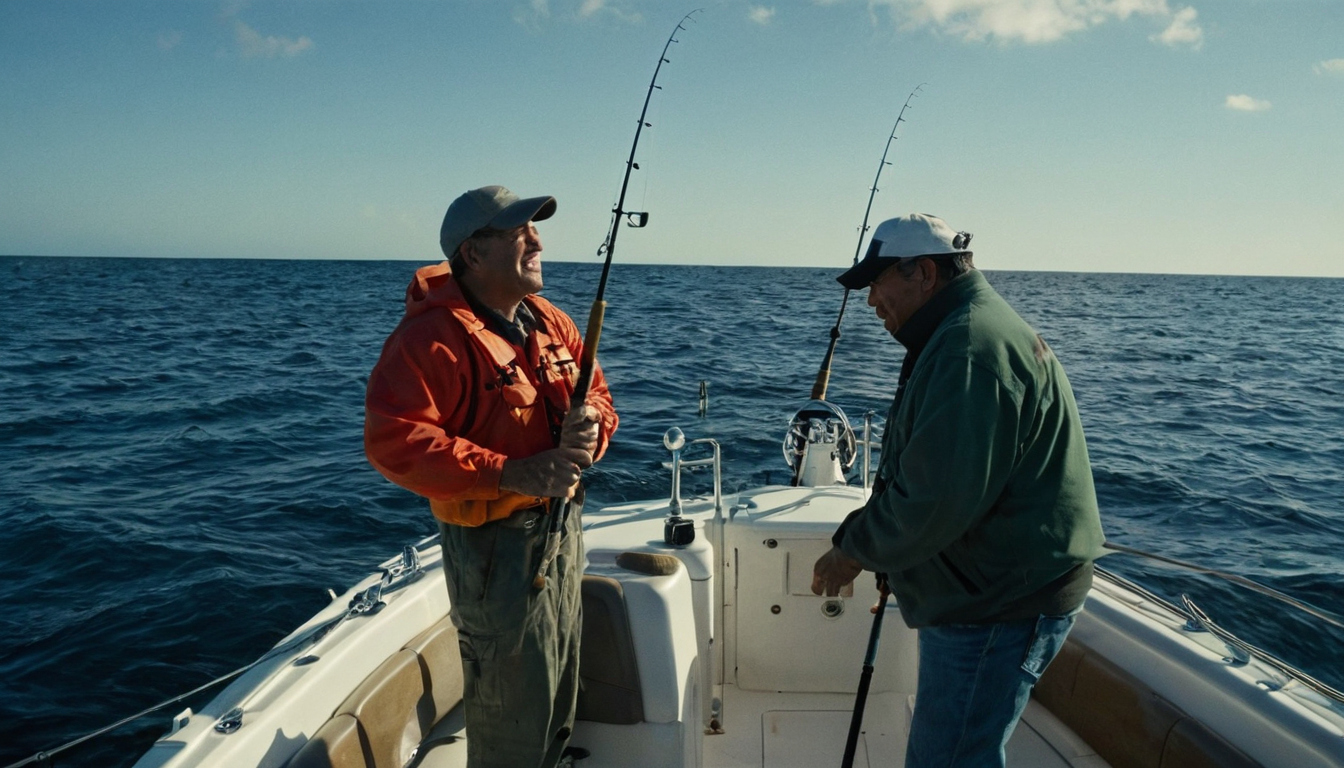
How much of a deep-sea fishing charter is actually spent fishing shown with practical context cues.
Calculate net fishing time before comparing charter prices
Usable fishing time = advertised duration minus transit, loading, stops, repositioning, and return. Ask whether the advertised clock begins at check-in, departure, or another point. Request a sample schedule showing expected departure, travel, fishing periods, location changes, and dock arrival.
Route distance must be checked for the actual marina and seasonal grounds. For example, the National Data Buoy Center identifies Station 41009 as approximately 20 nautical miles east of Cape Canaveral. That reference applies only to routes near Cape Canaveral. Every other departure market requires local distances and route constraints.
Longer charter hours do not guarantee proportionally more fishing
Extra hours may expand the captain’s range, but they may instead cover a longer outbound run, slower travel in rough conditions, or several moves between fishing locations. Ask how much additional rod-in-water time the longer booking normally creates, while recognizing that weather, fish location, and captain decisions can change the estimate.
No charter duration guarantees a particular catch. The practical limit is not only how far the boat can travel, but how long the least experienced passenger can tolerate the transit, motion, waiting, and confined onboard space.
How should children’s ages, stamina, and accessibility needs affect charter duration?
A family charter should be sized around the least sea-experienced passenger, not the most enthusiastic angler. Age, attention span, tolerance for waiting, restroom needs, sun exposure, mobility, and previous boating experience matter alongside the boat’s actual layout.
Families should choose the trip around the least experienced passenger
Children who cannot follow safety instructions, manage fishing equipment with supervision, or remain comfortable during long periods of transit and waiting may need a shorter trip. Ask whether minimum ages change with trip length or sea conditions, whether children may rest in a protected cabin, and what adult supervision the operator requires.
A private charter may have more flexibility to return early, although the operator’s route, safety judgment, and booking terms still apply. A shared charter usually cannot shorten everyone’s trip for one uncomfortable passenger. Confirm the early-return policy before paying.
Confirm the fishing boat’s restroom, shade, seating, and boarding access
- Is the restroom private, child-friendly, and available while underway?
- Does every passenger have secure transit seating and reliable shade?
- Are the railings and sleeping arrangements appropriate for children?
- Does boarding involve steps, ladders, gaps, or an unstable dock?
- Can the crew provide boarding assistance or mobility accommodations?
For recreational vessels in United States waters, federal rules generally require a child under age 13 to wear an appropriate Coast Guard-approved personal flotation device while underway unless the child is below deck or inside an enclosed cabin, subject to applicable state rules. Verify that the operator carries a suitable child-size life jacket.
After confirming that the boat fits the family, consider whether a longer trip adds unacceptable motion exposure or weather risk.
Does a longer deep-sea fishing trip increase seasickness and weather risk?
A longer deep-sea fishing trip increases exposure to vessel motion, sun, temperature changes, and shifting offshore conditions, although individual tolerance varies. Choose the duration using conditions along the exact route, the captain’s operating limits, and each passenger’s motion history.
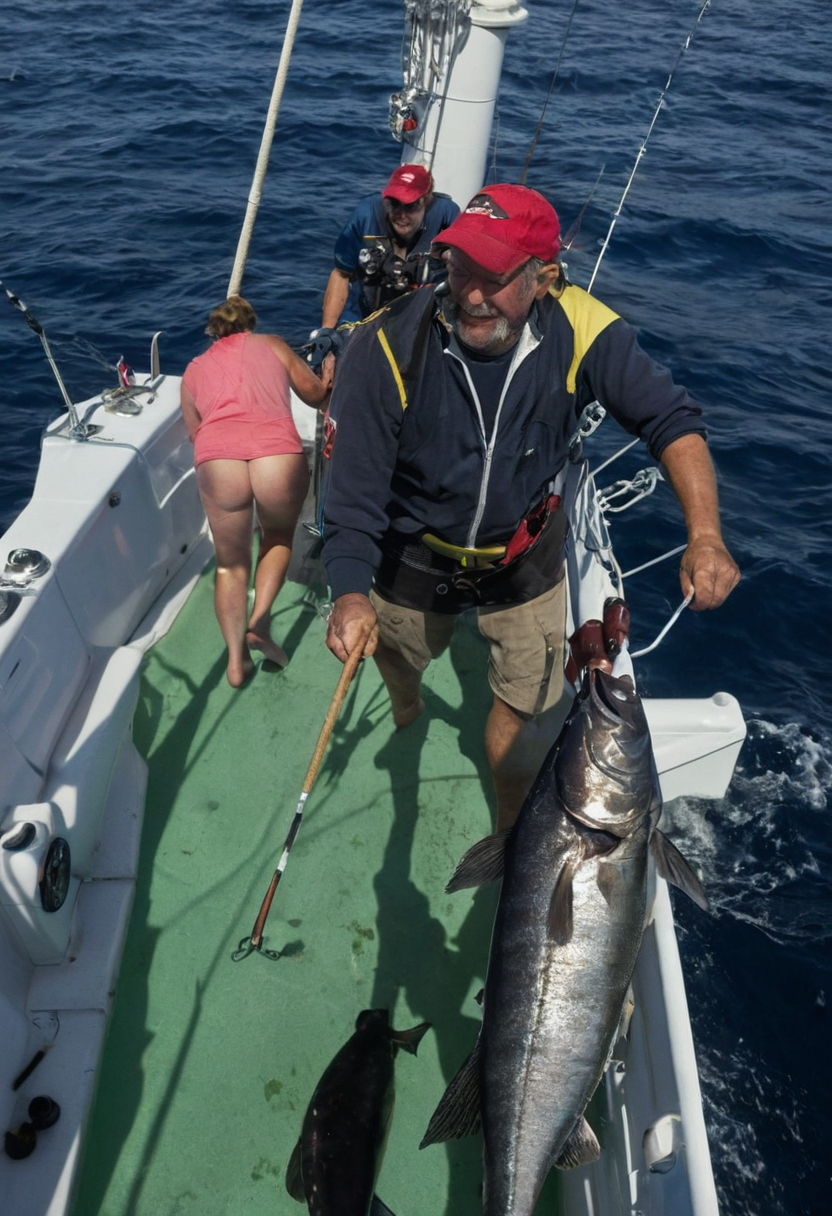
Does a longer deep-sea fishing trip increase seasickness and weather risk shown with practical context cues.
Use route-specific marine conditions instead of a generic weather app
A shoreline forecast may not describe the inlet, offshore transit, or fishing grounds. Check the official marine zone covering the route, then ask the captain how wind direction, wave period, inlet conditions, and the vessel’s design could affect comfort.
- Review forecast wind, waves, precipitation, visibility, temperature, and active advisories.
- Confirm whether the operator may cancel, postpone, reroute, or shorten the charter.
- Ask which conditions would make the captain recommend a shorter trip for children or beginners.
- Check whether a private charter can return early and how that decision affects charges.
Relevant offshore buoys can add context, but observations are not promises about the departure window. A NOAA National Data Buoy Center station page, when located near the planned route, may report wind, gusts, significant wave height, dominant wave period, pressure, and temperatures. Match every observation to its station, timestamp, and operating sensors.
Wave labels also need interpretation. The National Data Buoy Center defines significant wave height as the average height of the highest one-third of waves during the sampling period, not the height of every wave. Average wave period and dominant wave period are separate fields, so neither serves as a stand-alone comfort score.
Prepare for motion sickness before boarding the charter
Motion preparation should begin before the boat leaves, while passengers can still make calm decisions.
- Sleep adequately, eat a light familiar meal, and bring drinking water.
- Avoid arriving dehydrated or affected by alcohol.
- Ask where the vessel offers fresh air, forward visibility, and the most comfortable seating.
- Tell the crew early if nausea begins rather than waiting until symptoms become severe.
- Discuss medication choice, timing, contraindications, and possible drowsiness with a clinician or pharmacist. Obtain child-specific guidance instead of giving a child an adult product or dose.
Once comfort and weather limits are clear, decide whether a target species provides a sound reason to accept the extra range and motion exposure of a longer charter.
When do target species and fishing regulations justify a longer charter?
Target species justify a longer charter only when they are legally available, seasonally plausible, and commonly found beyond shorter-trip range. Check current rules for the fishing date and jurisdiction, then ask the captain about travel distance, fishing methods, and recent conditions. Extra hours improve opportunity, not certainty.
Match charter duration to legal seasons and realistic fishing range
Before paying for a full-day trip, confirm that the species is open and review current size limits, bag limits, possession rules, closures, and reporting requirements. Ask which license or charter permit covers passengers. The operator should also explain whether reaching the target requires an extended run, trolling time, anchoring, or repeated drops.
Choose a fishing experience before choosing a trophy target
Families may value frequent action, instruction, and scenery more than a long wait for one offshore species. Ask how physically demanding the method is and whether crew members bait hooks, assist children, handle catches, and clean fish. These answers reveal whether the exact charter fits the group.
What should families ask before booking a deep-sea fishing charter?
Families should compare fishing charters by total trip value, not hourly price alone. Confirm likely transit, private or shared format, passenger limits, included gear and licenses, fish cleaning, food, gratuity expectations, restroom access, cancellation terms, and the weather process for the exact boat and date.
Compare the total cost per usable fishing hour
Calculate the complete price using the base fare, taxes, fuel or booking charges, parking, food, catch processing, and any operator-stated gratuity practice. Divide that total by estimated usable fishing time. Confirm whether pricing is per boat or per passenger and whether a shared charter can return early.
Use a pre-booking checklist for the exact charter boat
- Request written confirmation of check-in time, location, deposit, refunds, rescheduling, passenger limits, and inclusions.
- Verify restroom, shade, seating, boarding access, safety briefing, emergency equipment, captain credentials, and vessel documentation. Review why offshore fishing trips are normally booked with a captain.
- Confirm parking, identification, waivers, packing restrictions, clothing, food, water, coolers, and the contact for weather updates.
Before paying, compare net fishing time with the least experienced passenger’s tolerance, not advertised hours alone.
Frequently Asked Questions
How long is a typical deep-sea fishing trip?
Operators commonly sell half-day, three-quarter-day, and full-day trips, but the hours attached to those labels vary. Ask for exact check-in, departure, and return times, plus expected transit to the fishing grounds.
Are deep-sea fishing charters suitable for complete beginners and children?
Many are, provided the operator accepts the child’s age and the boat matches the family’s needs. Verify supervision rules, life jackets, seating, shade, restroom access, boarding difficulty, fishing assistance, and early-return terms.